Week 15
Hi,
.
As you begin to hear the whispers of the miracle within you, let’s discover what this special 15th week brings!

3.98
inches long
2.47 oz
ounces
This week, your baby is about the size of a red, adorable apple!
Just like the apple’s plump and sweet structure, your baby is gaining strength and developing unique features.
Like a tiny apple, growing to bring health and joy into the world, this sweet little being is already adding a beautiful flavor to your life!
Your Baby's
Development
In week 15, your baby's development is progressing rapidly, and its organs are evolving in the following ways
.webp)
Eyes
Though still closed, they are beginning to develop light sensitivity
.webp)
Ears
Settling into their proper position.

Skin
Transparent, with visible blood vessels.

Muscles
Strengthening and developing steadily.

Hair
Eyebrows and hair on the scalp are starting to become visible.
.webp)
Tooth Buds
Continue to form, laying the foundation for future teeth.

Bones
The skeletal system is strengthening and taking shape.

Limbs
Legs are lengthening, and your baby is moving and testing their limbs.
Did you know?
This week, your baby’s bones begin to harden—a process called ossification. Because of this, your baby's skeleton may become visible on an X-ray.
As your baby grows rapidly, your body also continues to change. Increased blood volume, hormonal shifts, and your baby’s development are behind many of the physical changes you're experiencing.
Symptoms
you may experience
Weight Gain
Weight gain should align with your body mass index (BMI), which helps maintain overall health.
Healthy weight gain: 1–2 lbs
Dizziness or Faintness
Feelings of dizziness or faintness may result from your growing uterus pressing on blood vessels.
Swollen Gums
Swollen gums become more sensitive due to hormonal changes
Nasal Congestion and Shortness of Breath
Shortness of breath and nasal congestion are caused by increased blood flow to mucous membranes.
Heartburn and Indigestion
Relaxation of the digestive system can lead to heartburn and indigestion; you might try digestion-supporting foods.
Excessive Saliva
It is linked to hormonal shifts.
Insomnia
Slower Digestion
Progesterone slows digestion, making you feel more bloated.
Varicose Veins
You might notice more visible veins, especially in your legs.
Headaches and Dizziness
Dehydration or low blood sugar may trigger these symptoms.
As your baby grows, it's perfectly normal to experience some changes and symptoms. Here’s what you might notice

If you notice new symptoms or feel concerned about anything
Don’t hesitate to reach out to your doctor.
Whats Happening
to Your Body?
.webp)
Baby Bump Visibility
A baby bump may not yet be very visible, but second-time mothers may notice a slight belly increase.
.webp)
Breast Growth
Breasts continue to grow, and the areolas darken.
.webp)
Darkened and Enlarged Areolas
The area around your nipples may grow larger and darker — a natural change that helps your baby find the breast after birth.
.webp)
Visible Veins
Prominent blue veins may appear on the breasts due to increased blood flow.
.webp)
Linea Nigra
A dark vertical line, known as the linea nigra, may become more visible down the center of your belly.
.webp)
Hair Changes
Hormonal changes may make your hair look fuller, thicker, and shinier.

Fetal Movements
In the second trimester, fetal movements and fetal hiccups may start to be felt.

Vivid Dreams
You may have vivid or strange dreams. These reflect subconscious pregnancy fears and excitement, and are completely normal.

Mood Swings
Mood swings may occur. With hormones dancing through your body, it’s natural to feel both joyful and anxious at times. Be kind to yourself—these emotions are temporary.

Changes in Libido
Changes in sex drive are possible. Pregnancy can increase or decrease desire—it’s all normal. Listen to your body and don’t judge yourself.
.webp)
Anxiety
Feelings of anxiety may surface. Concerns about your baby’s health or the future are natural. Learning to manage them can bring more peace during this journey.
Be gentle with yourself! Pregnancy is a journey, and every feeling along the way is part of it. Embrace yourself with love and patience.
As your baby keeps growing, your body beautifully adapts to make room. Here are some physical and emotional changes you might notice at 15 weeks
Remember!
Feeling your baby grow each week is a beautiful, unforgettable adventure for both you and your tiny miracle.
Quick Tip!
As your uterus grows, the surrounding ligaments stretch, which can cause mild aches on the sides. This is normal and temporary.
Every new symptom you experience is a sign of your baby’s beautiful development.
Take good care of yourself and don’t forget to rest!
Reminder
It’s completely natural for some friendships to change during pregnancy. Not everyone will understand how you’re feeling and that’s okay.
Don’t worry about it; just remember that this is one of the most precious times for you and your baby
Quick Tip!
With these thoughtful gestures, you can make this special journey even more enjoyable for your partner. Remember, your support is one of her greatest sources of strength during this amazing time.
When Should
You Call
Doctor?
Fever (100.4°F or higher)
A high temperature may indicate an infection or another health concern. It’s essential to seek medical attention promptly.
Pelvic Pain (Not Related to Cramps)
Unusual pain in the pelvic area can be a sign of a more serious issue and should be evaluated carefully.
Decreased Urination or Dark-Colored Urine
This may be a sign of dehydration or another condition. Make sure to inform your doctor.
Severe Vomiting
You could be experiencing a condition like hyperemesis gravidarum. If vomiting becomes intense or frequent, contact your provider.
Shortness of Breath
Although mild breathlessness can be normal in pregnancy, sudden or severe difficulty breathing should be assessed by a professional.
Sudden Increase in Vaginal Discharge
An unusual rise in vaginal discharge, especially if it changes in color or consistency, needs medical evaluation.
Vaginal Bleeding or Discharge
These symptoms aren’t always normal and should be discussed with your doctor to ensure everything is progressing safely.
If your pregnancy is progressing normally, simply continuing with your scheduled prenatal checkups is usually sufficient.
If you experience any of the these symptoms during pregnancy, it’s important to contact your healthcare provider.
Monitoring your weight gain is essential to ensure healthy progress throughout pregnancy. Regular tracking helps assess your overall health.
High blood pressure is an important indicator that needs to be monitored during pregnancy to avoid complications.
This screening combines ultrasound and blood tests, often based on first trimester maternal serum screening results.
Known as the “multiple marker” or “quad screen,” it measures four key substances in your blood: AFP, estriol, inhibin A, and human chorionic gonadotropin (hCG). It helps assess the risk of:
-
Down syndrome
-
Trisomy 18
-
Neural tube defects such as spina bifida
-
Abdominal wall defects in the fetus
While not 100% definitive, this test helps identify potential chromosomal abnormalities and whether further testing is needed.
-
Typically offered between weeks 15 and 20, amniocentesis is a diagnostic test recommended if screening results indicate a higher risk. A small amount of amniotic fluid is extracted from the uterus to check for genetic conditions like cystic fibrosis, sickle cell disease, congenital heart defects, and neural tube defects. Your doctor will help determine whether this test is appropriate for you.
Your doctor may also measure your fundal height this week. This measurement provides insight into your baby’s position—an elevated fundal height may suggest a breech position, while a lower measurement could indicate a transverse position.
Your OB-GYN Visit This Week
During this stage of pregnancy, your doctor will perform several important tests to ensure a healthy journey for both you and your baby. These tests help detect potential issues early and allow for timely intervention.
Is There
a Risk Of
Miscarriage?
Structural
abnormalities
Uncontrolled
maternal diabetes
or exposure to
teratogens
Infections
Sexually
transmitted
diseases
Hormonal
abnormalities
Unbalanced
lifestyle
The risk of miscarriage at 19 weeks gestation is very rare, but the possibility of pregnancy loss in the second trimester is not completely eliminated
-Approximately 1-5% of pregnancy losses occur between 13 and 19 weeks of pregnancy.
- Of these losses, 24% are due to chromosomal abnormalities in the fetus.
If you notice any of the following symptoms, you should contact your doctor immediately
-
Severe abdominal cramps
Intense pain in the lower abdomen or back. -
Bleeding
Bleeding can be light spotting or more intense
Signs of Miscarriage
at 18 Weeks
To reduce the risk of miscarriage
-
Adopting a healthy lifestyle
-
Detecting possible complications with early pregnancy tests
-
Regularly attending the treatments and prenatal check-ups recommended by your doctor
-
Always consult your doctor before using herbal supplements
Sharing every change you experience this week, big or small, with your doctor will ease your worries. Remember, with healthy living habits and guidance from your doctor, you can be one step closer to safely embracing your little miracle.
How to
Prevent Miscarriage?

Unsafe
Plants
in Pregnancy
Saw palm
Dong Quai
Goldenseal
Ephedra
Passion flower
Pay D'Arco
Yohimbe
Black gentian
Roman chamomile
Blue gentian
Dandelion
Chamomile
Stinging nettle
Aloe
Mint leaf
Ginseng
Fireweed
Cassia
Kava Kava
Evening flower
These plants can cause uterine contractions that can lead to miscarriage, premature birth or damage fetal development

Safe
Plants
in Pregnancy
Red raspberry leaf
Peppermint leaf
Ginger root
Oats and oat straw
Slippery elm bark
Each herb works differently , your doctor will know what’s best for you. When using herbs, eat well and drink plenty of water. Always choose what’s safest for you and your baby.
With your doctor’s approval, you may consume the following herbs in moderation
Helps ease digestion and maintain stable energy levels. Small, frequent meals are key.
Drink plenty of water to support circulation and maintain healthy amniotic fluid levels.
A balanced intake of meat, grains, legumes, dairy, and fresh fruits and vegetables provides essential nutrients. Around 2,200 calories per day is sufficient in the second trimester.
Physical activity helps regulate blood sugar and reduces the risk of gestational diabetes.
These substances may negatively affect your baby’s development.
This position improves blood flow and promotes more restful sleep.
Light foods like these can help soothe an unsettled stomach.
Maintain a healthy metabolism by eating regularly. Avoid lying down immediately after eating.
These can cause indigestion and discomfort—limit their intake.
Daily folic acid and vitamin B6 intake supports healthy development.
Opt for breathable, loose-fitting maternity clothes for better comfort. Avoid heels—flats or supportive slippers provide better safety and ease.
Your baby’s hearing is developing—talking helps them recognize your voice.
Only use medicines that are confirmed safe by your healthcare provider.
Spending time with loved ones can ease emotional stress and boost your mood.
Pregnancy is a shared journey—support from your partner makes everything more manageable and joyful.
Tips for You

During your pregnancy journey, there are some important steps you can take to protect both your baby’s health and your own. Here’s how to enjoy a healthy and comfortable pregnancy
Must-Have Products
for This Week!
These visits are a great opportunity to track your baby’s development and offer emotional support to your partner.
Sharing daily chores can reduce your partner’s stress and lighten their load.
Walking side by side offers both physical support and quality time together.
Taking a break helps both of you recharge and contributes to the health of mom and baby.
Involving yourself in the preparations creates a meaningful connection and shared experience.
Helping choose comfortable and stylish clothes shows your support and adds joy to this special time.
Your partner may need both physical and emotional support during this time. Being there for her not only strengthens your bond but also helps you grow into your role as a parent

Tips for Partner
Movie Pick
of the week

The Incredibles is a fun and inspiring pick. With themes of family bonds and heroism, it mirrors some of the emotions you may be experiencing. Its upbeat tone and empowering message can lift your spirits. Watching it with loved ones makes for a heartwarming moment.

Book Pick
of the week
Brain Rules for Baby by John Medina
A science-based guide to fostering your baby’s intelligence, happiness, and emotional health.
Name Suggestions
of the week
Nora
Of Irish origin, meaning “honor.” It reflects a wise, respected, and graceful personality. Nora suggests a refined, elegant soul who inspires those around her.
Muhammad
Of Arabic origin, meaning “praised, commendable.” A name of sacred value, symbolizing a strong, respected character full of wisdom and leadership.
Share Your Week with Us!
Every week of pregnancy is a new chapter, a unique experience…
How was your week? How are you feeling? Share your little joys, excitements, or questions with us!
Your experiences can inspire and support other moms-to-be on the same journey.
Your baby is in the amniotic sac within your uterus, about 4–5 inches below your belly button.
Some women might feel faint movements now, but most detect them more clearly between weeks 20–22.
Not yet. Babies typically start sensing touch from the outside around week 22.
Yes. You may start to feel your uterus and its muscles stretching, which is a normal change.
FAQ
Explore & Learn


I hope this blog has provided you with helpful information about pregnancy while also making your reading experience enjoyable. Remember, the details shared here are purely for awareness, entertainment, and educational purposes.
If you have any questions or concerns during this journey, don’t hesitate to consult your doctor. Wishing you a healthy and love-filled pregnancy!
SEE YOU NEXT WEEK WITH NEW AND EXCITING INSIGHTS!
For Underweight Moms-to-Be
or Those Struggling to Gain Weight
Gender Screening on Ultrasound
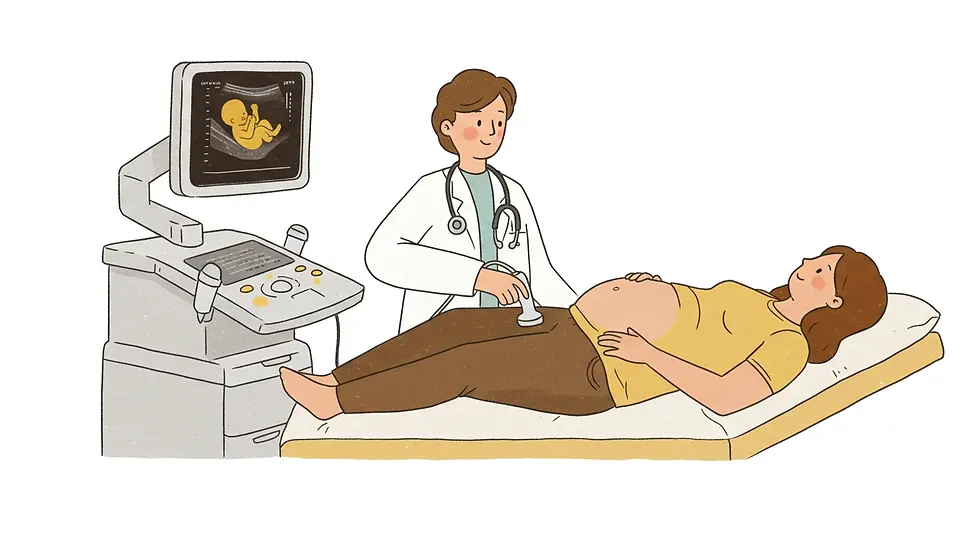
However, for the most accurate results, it’s typically best to wait until around 20 weeks,
when gender differences become more pronounced. While gender predictions can be made as early as week 16, waiting a few more weeks can provide a clearer and more definitive answer
Baby Boy
On an ultrasound, the genitalia of a baby boy may appear as a snail or turtle
shape. This image can be a clue that your baby is a boy.
Baby Girl
For a baby girl, the ultrasound may show three distinct lines (the outer edges of the vulva). These lines are indicative of a baby girl.